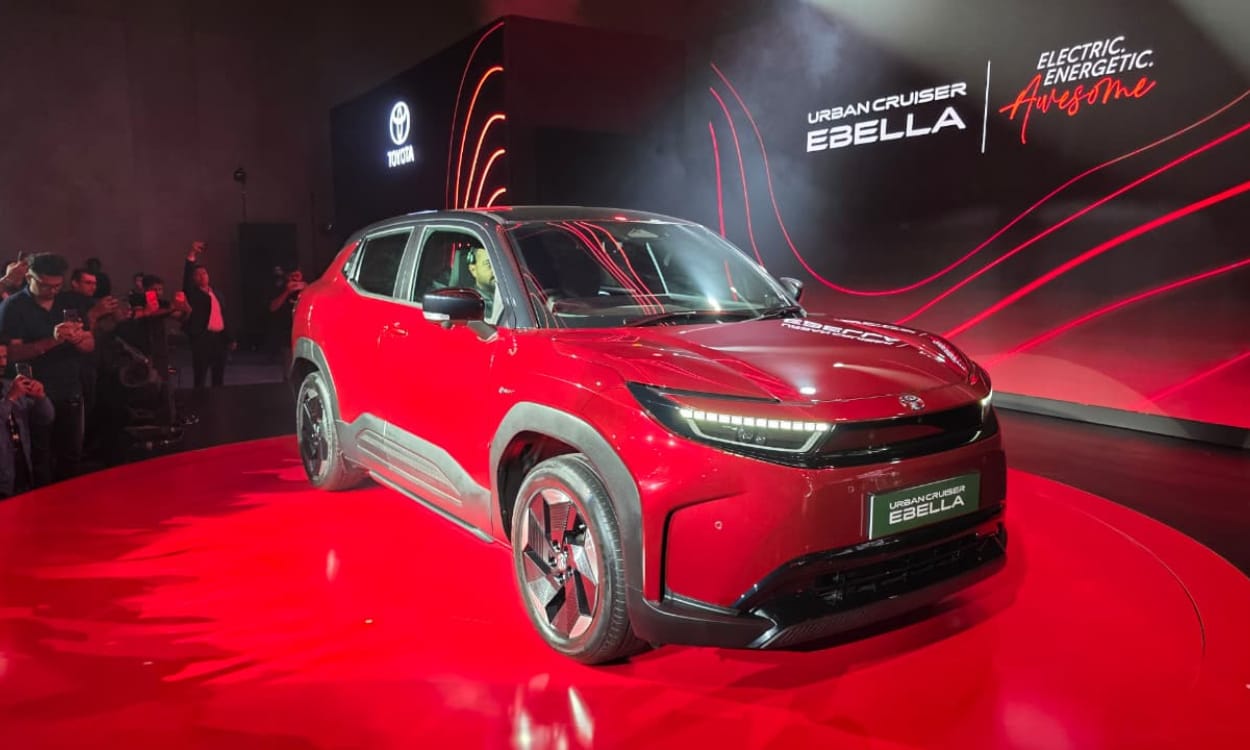
We outline the pros and cons of Toyota’s first electric SUV for the Indian market.
Toyota began 2026 by unveiling its first mass-market EV for India — the Urban Cruiser Ebella. Essentially a rebadged Maruti Suzuki e Vitara, the Ebella shares its battery options, interior layout, and features, but differentiates itself through Toyota-specific styling. While official pricing is still awaited, we’ve driven the Ebella on Indian roads. Here’s what stands out — and what doesn’t.
Pros
1. Smooth and Refined Powertrain
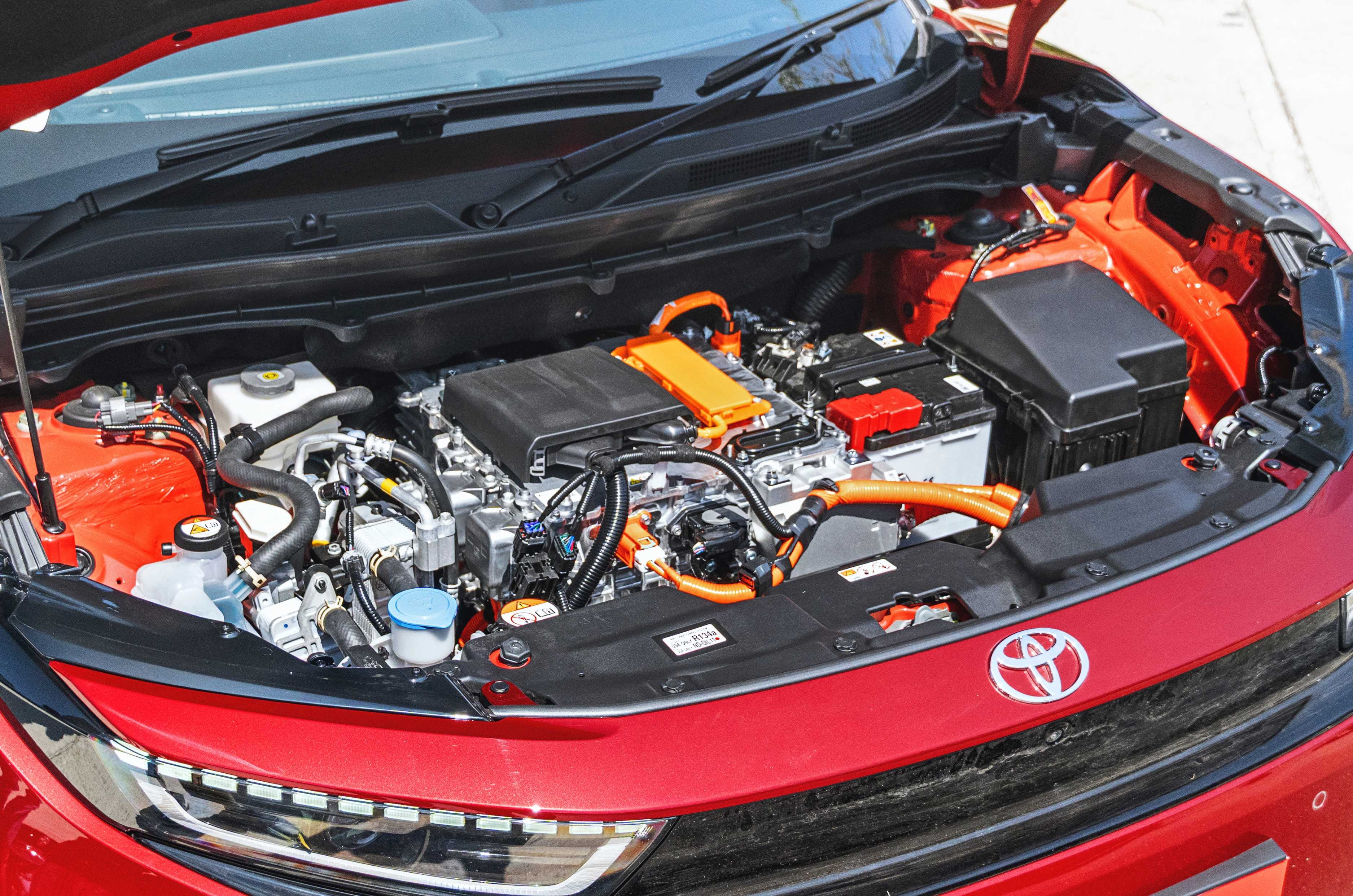
The Urban Cruiser Ebella is offered with two battery options:
49kWh (144hp, 193Nm) — claimed range: 440km
61kWh (174hp, 193Nm) — claimed range: 543km
In our preliminary real-world testing, the larger battery delivered around 370km on a full charge. Power delivery is smooth and linear, making it ideal for relaxed daily driving. Three drive modes — Eco, Normal, and Sport — allow you to tailor performance. A 0–100kph time of 9.25 seconds isn’t class-leading but is more than adequate for most users.
2. Premium and Well-Built Interior
Step inside, and the Ebella immediately feels upmarket. The brown-and-black upholstery, soft-touch dashboard surfaces, and damped switchgear create a premium ambience. While the gloss black centre console looks stylish, it does attract fingerprints and dust easily.
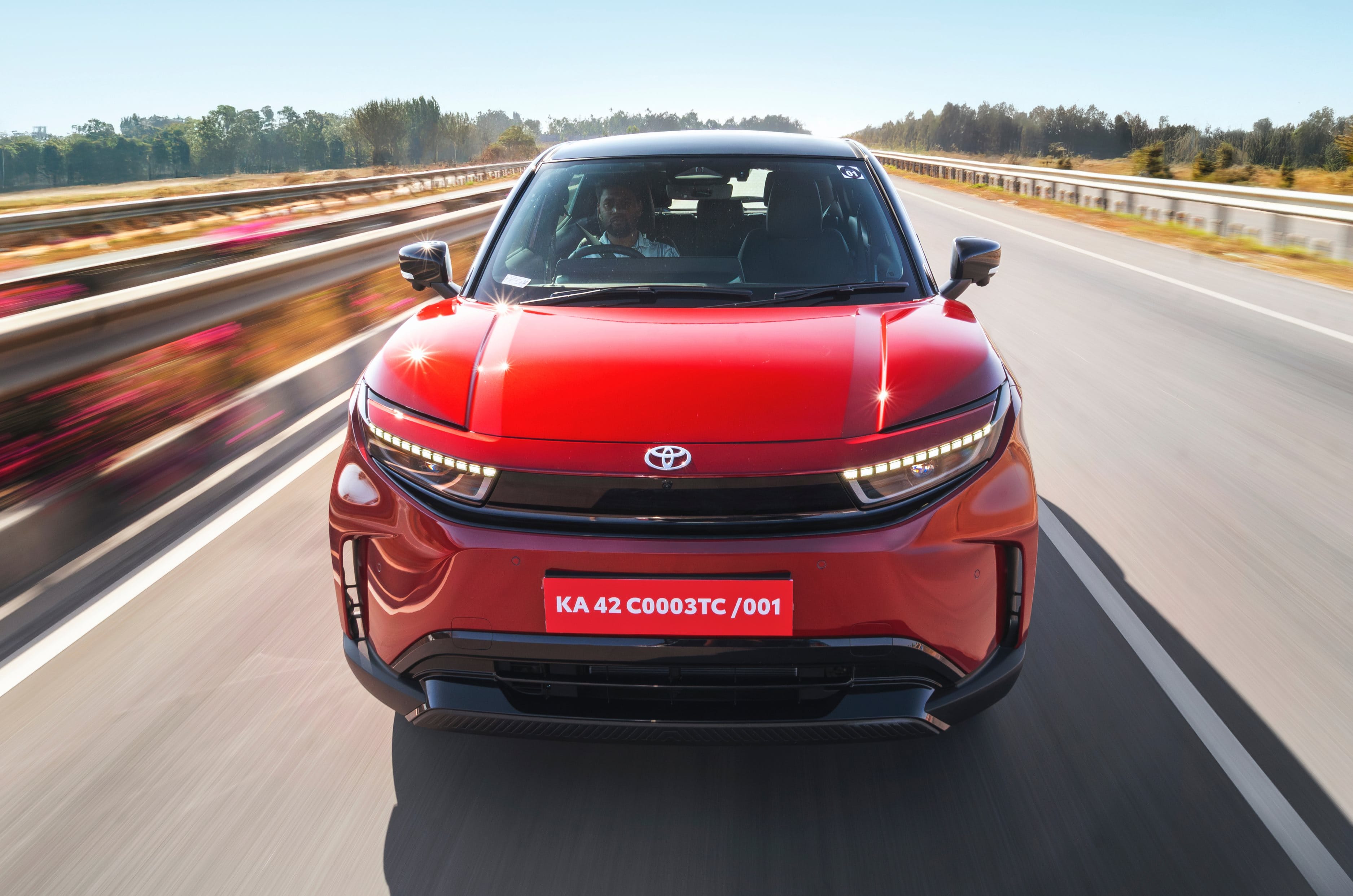
Feature highlights include:
10.25-inch infotainment touchscreen with wireless Apple CarPlay & Android Auto
10.1-inch digital instrument cluster
Fixed single-pane glass roof
360-degree camera
JBL sound system
10-way power-adjustable driver’s seat
Wireless charging, ventilated front seats
Level 2 ADAS and ambient lighting
3. Easy to Drive in the City
The Ebella is well-suited for urban usage thanks to its light steering and tight 5.2m turning radius, making it easy to manoeuvre in traffic and tight parking spots. Handling is safe and predictable, and the brake pedal offers a natural, confidence-inspiring feel.
Cons
1. Unfriendly Infotainment Interface
Despite Toyota’s reputation for user-friendly ergonomics, the Ebella’s infotainment system falls short. The interface is sluggish, and several key functions — such as climate control and seat ventilation — are buried within menus instead of being accessible via physical buttons. This can be distracting while driving and impacts overall usability.
2. Compromised Rear Comfort and Boot Space
Battery placement raises the cabin floor, resulting in a knees-up seating position for rear passengers, which can be uncomfortable on long journeys. Rear headroom is limited, there are no rear sunshades, and the 306-litre boot is smaller than many rivals. For context, the Mahindra BE 6 offers a 455-litre boot.
3. Busy Ride Quality
Ride comfort is one of the Ebella’s weaker areas. The suspension feels firm at low speeds, crashing over sharp speed breakers and potholes. At highway speeds, the car feels floaty at the rear, with noticeable pitching, which may induce motion sickness for some occupants.
Verdict
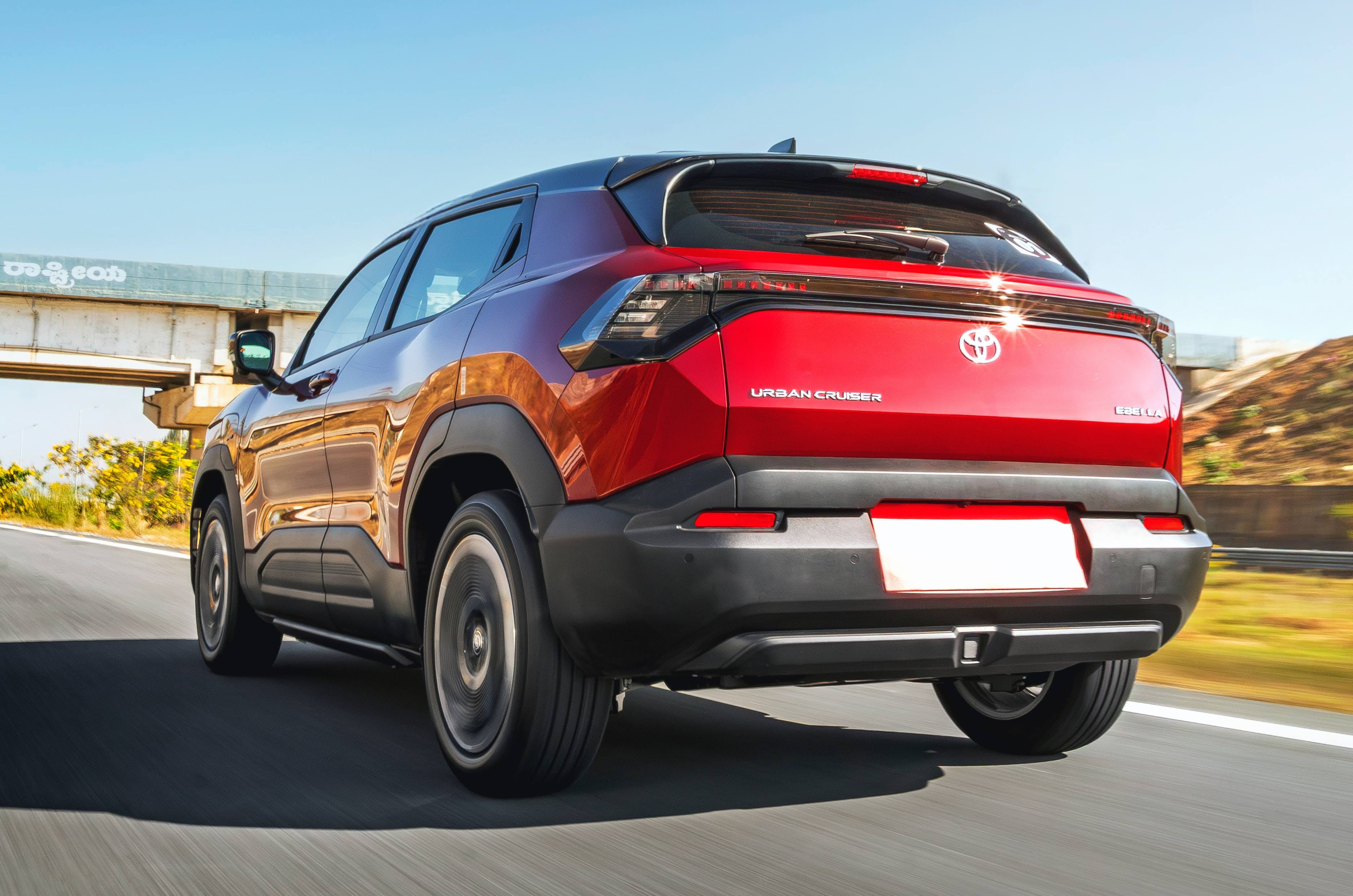
The Toyota Urban Cruiser Ebella impresses with its smooth powertrain, premium cabin, and city-friendly driving manners. However, its compromised rear comfort, average ride quality, and frustrating infotainment interface prevent it from being a class benchmark. Buyers prioritising refinement and features will appreciate it, but those seeking ride comfort and rear-seat space may want to explore alternatives.